

Nine ancient teeth found in two caves in southern China have prompted scientists to reconsider their ideas about the way of life of upright man, Homo erectus. The study showed that members of this species may have lived successfully in dense tropical forests and survived in the region much longer than previously thought.
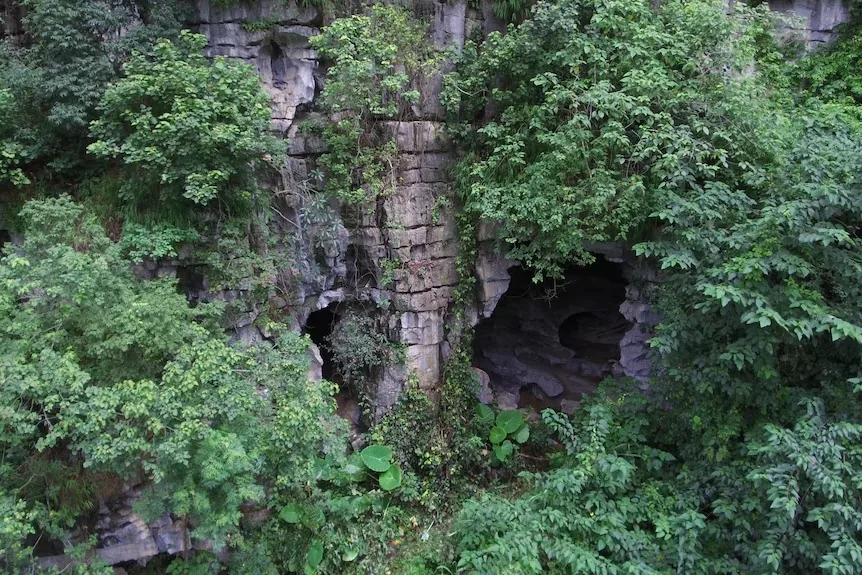
The teeth were discovered in the Basian and Nasian caves together with more than 18,000 fossil remains of mammals, including elephants, monkeys, pandas, tapirs and rhinoceroses.
Eight of the nine teeth have the characteristic features of Homo erectus. Analysis of preserved proteins confirmed that four of the five samples studied belong to this species. At the same time, small differences in protein composition may point to a previously unknown population of Homo erectus.
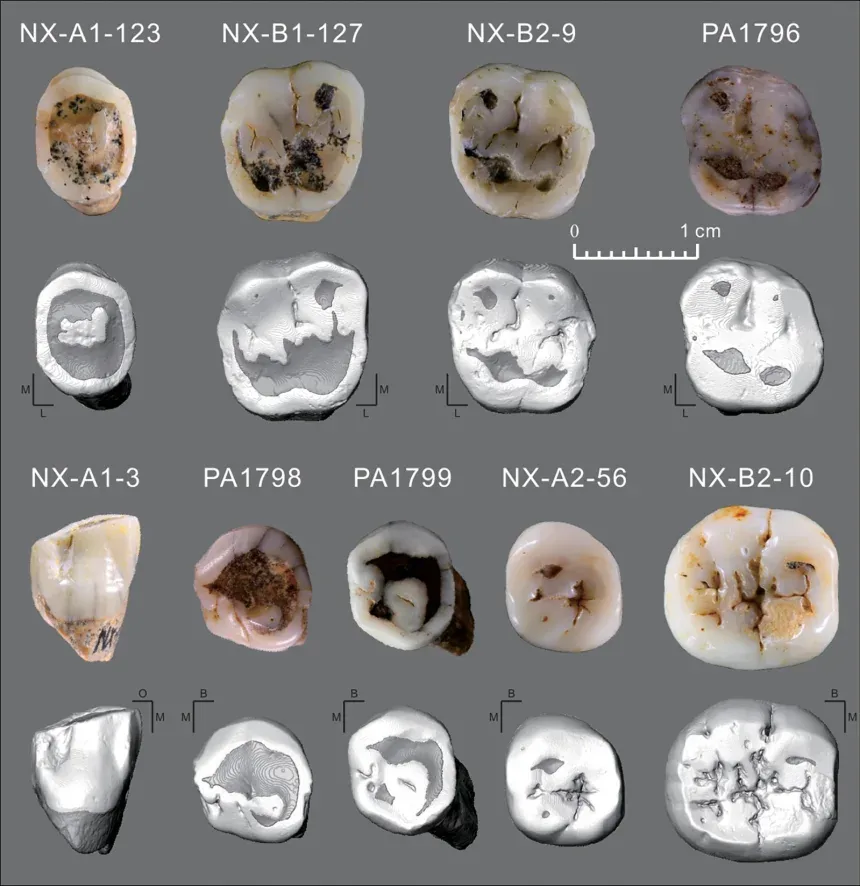
The ninth tooth proved even more mysterious. Its structure and protein composition do not match Homo erectus, Neanderthals or modern humans. The researchers do not rule out that it may have belonged to a Denisovan, but this cannot yet be confirmed owing to a lack of comparative data.
The age of the finds was another surprise. Radiometric dating showed that the teeth are between 184,000 and 324,000 years old. Previously, fossil evidence of Homo erectus in China had all but disappeared after the 400,000-years-ago mark.
The way of life of these ancient people attracted particular interest. Homo erectus had long been considered a species adapted mainly to open spaces such as savannahs and dry grassy plains. However, analysis of carbon isotopes in the teeth showed that these people’s diet was linked mainly to the vegetation of dense tropical forests.
This is consistent with other fossil finds indicating that humid tropical forests predominated in southern China during that period. Homo erectus thus appears to have been able to live in such an environment for quite a long time.
Analysis of strontium isotopes also suggested that these ancient people moved between different natural areas. The researchers believe that some of these movements may have reached the territory of present-day northern Vietnam, about 250 km from the caves.
The new data do not mean that tropical forests were an ideal environment for Homo erectus. However, they show that its ability to adapt to different conditions may have been considerably greater than previously thought.
Both studies, published in the journal Nature, add to our understanding of human evolution. They indicate that Homo erectus was less dependent on open landscapes than had been assumed, while the mysterious ninth tooth leaves open the question of which other groups of ancient humans may have lived at the same time in China’s tropical forests.


