

Audi has come up with a way to combine a large touchscreen with physical buttons. The company has filed a patent application in Germany proposing that the buttons be made movable, so that they can be extended when needed and retracted behind the edge of the display.
In the retracted position, the panel is hidden behind the lower edge of the touchscreen. In normal mode, the display shows a row of virtual keys, which Audi calls a «digital twin» of the physical panel. The layout of functions on the virtual version matches that of the real buttons.
To extend the panel, the driver presses a round icon with a downward arrow in the centre of the on-screen strip. The virtual buttons then disappear and the physical panel folds out into the plane of the screen. Pressing the round key, this time on the panel itself, returns it to its recess.
The system can also work automatically. For example, when the video player is launched, the virtual buttons can be hidden to free up the screen for watching video, while the physical controls remain available.
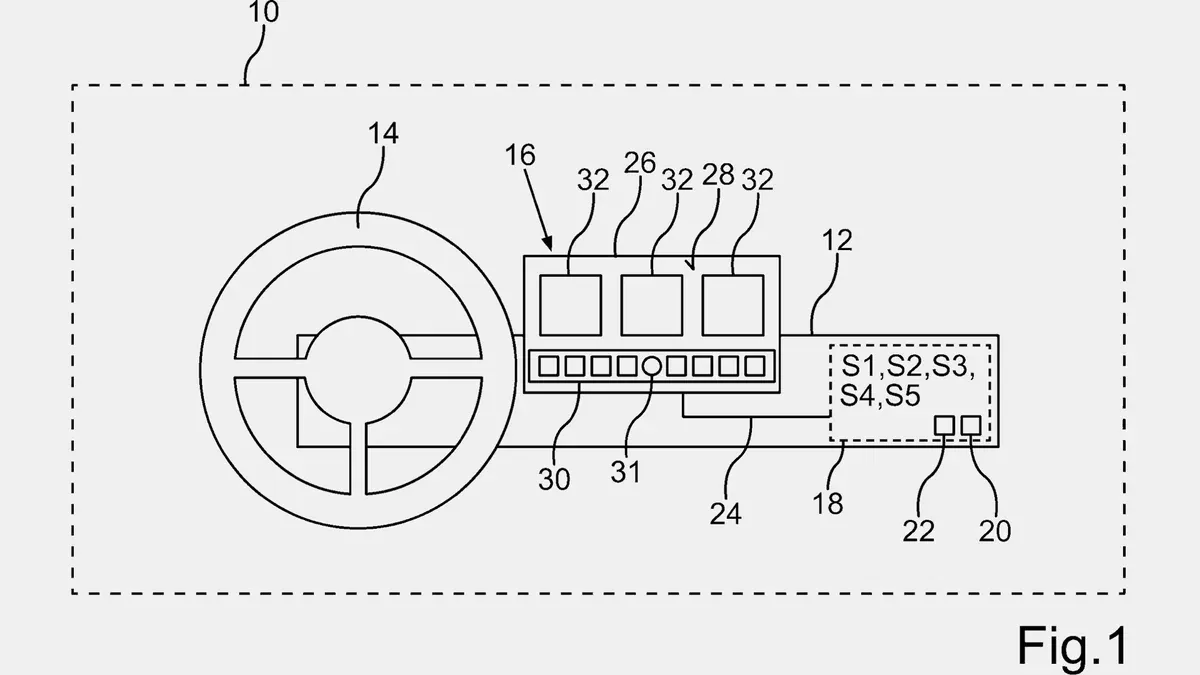
The patent also provides for the panel to extend automatically when the car is switched on after being parked, for manual control, and for activation by gestures and voice commands. According to the developers, dispensing with a permanent bottom row of virtual buttons would allow the screen to be made slightly smaller and the interface to be adapted to full-screen and partial modes.
The development comes amid a change in Audi's approach to interior design. The company has already brought back physical scroll wheels on the steering wheel of some models, and its chief creative officer Massimo Frascella has spoken out against excessively large screens. Audi's chief technical officer Rouven Mohr has also spoken of plans to use more traditional ergonomics in future models, with smaller displays and more physical switches.


