

Palaeobotanists from the United States and the United Kingdom have discovered a fossilised flower around 100 million years old inside a sandstone sample that had been kept in a museum collection for more than 130 years. The plant has been named Tomlinsoniella pedicellata.
The flower was very small: it was no more than 1.5 mm tall and about 1.2 mm in diameter. The researchers reported the discovery in American Journal of Botany.
The sandstone sample from the Dakota Formation in Kansas was collected in the late 19th century by the fossil plant researcher Leo Lesquereux. The stone later became part of the collection of the Smithsonian Institution's National Museum of Natural History. Palaeobotanist Stephen Manchester was studying another ancient flower contained in the rock, Dakotanthus, when he noticed the find hidden inside the sample.
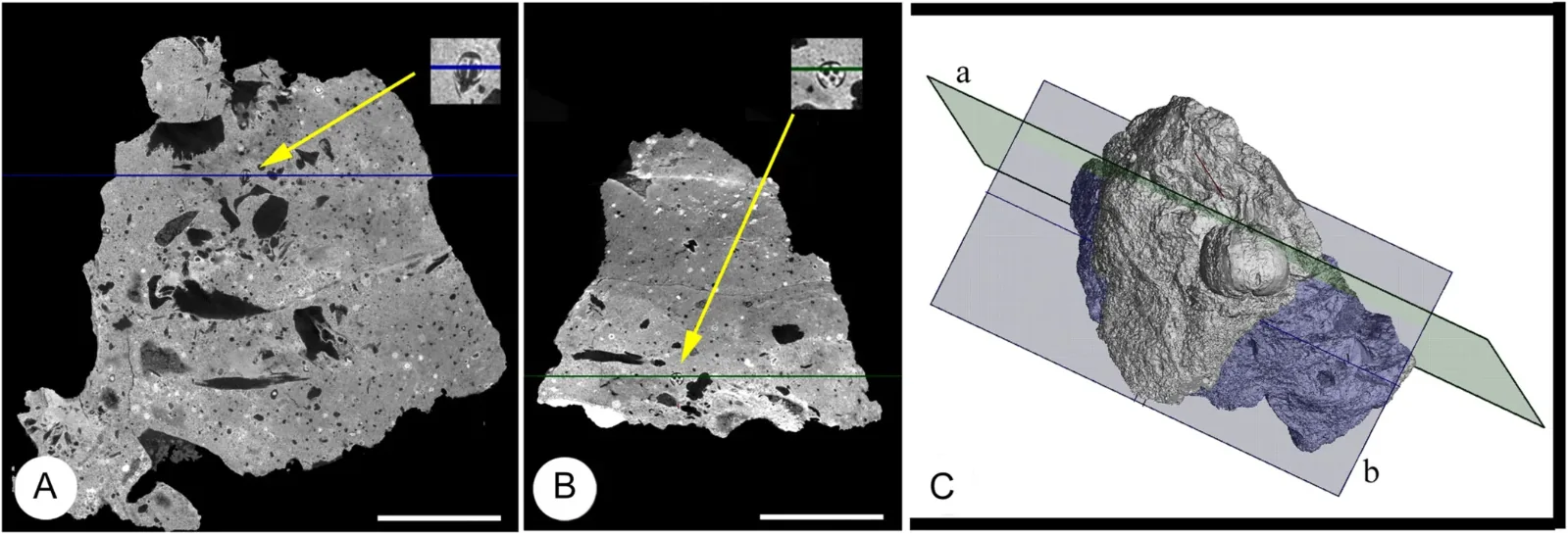
It was examined using micro-computed tomography. The X-ray images allowed the researchers to study the internal structure of the stone and create a three-dimensional model. The flower itself has not survived inside: it was buried in sand mixed with clay and, after decomposing, left a cavity replicating its shape.
Based on its structure, the find was classified as a monocot, a group that includes, among others, grasses, orchids, bananas and palms. The parts of the flower were arranged in five whorls of three elements each: three sepals, three petals, six stamens and three carpels.
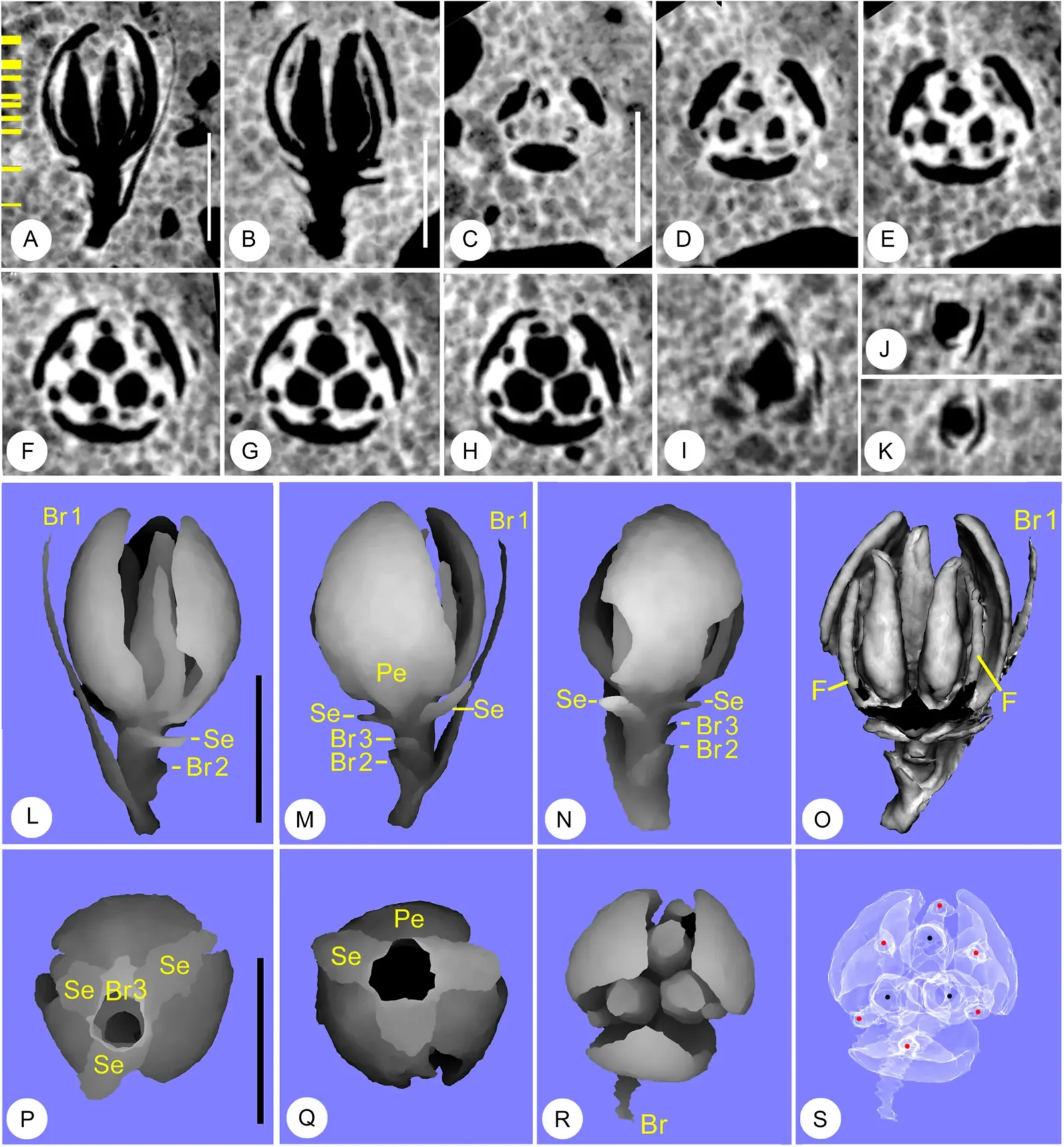
The carpels, however, were not fused together. This feature is found in only a small number of modern monocots. Taking all the characteristics together, the authors consider Tomlinsoniella pedicellata to be close to fan palms.
Monocots make up roughly a fifth of known flowering plants, about 70 thousand modern species. Genetic data indicate that the group emerged in the Early Cretaceous, but its ancient fossil remains are rare.
Tomlinsoniella pedicellata is considered the oldest known evidence of the classic monocot flower structure. If the suggested relationship with fan palms is confirmed, the find may also become the earliest evidence of the existence of this subfamily. The plant's exact position on the evolutionary tree has yet to be determined.


