

Scientists have studied the remains of a large ancient killer whale that lived in the southern North Sea 2.6–2.1 million years ago. Based on the structure of the bones, the specialists concluded that already in the Early Pleistocene the predator was capable of hunting large prey.
The study has been published in the journal PeerJ.
The fossils were discovered back in 1994 by fishing trawlers operating in the southern North Sea. Along with other fossil remains, including mammoth tusks, several fragments were brought to the surface that later turned out to be the remains of a member of the genus Orcinus. They were kept at the Natural History Museum Rotterdam, but a systematic study was carried out only decades later.
Hidde Bakker of the Natural History Museum Rotterdam and his colleagues examined the five most informative fragments: two skull fragments, part of a lower jaw and two sets of cervical vertebrae. Using comparative analysis and 3D models, the researchers estimated the animal's length at 7.2–7.7 metres. This is comparable to the size of the largest modern male killer whales.
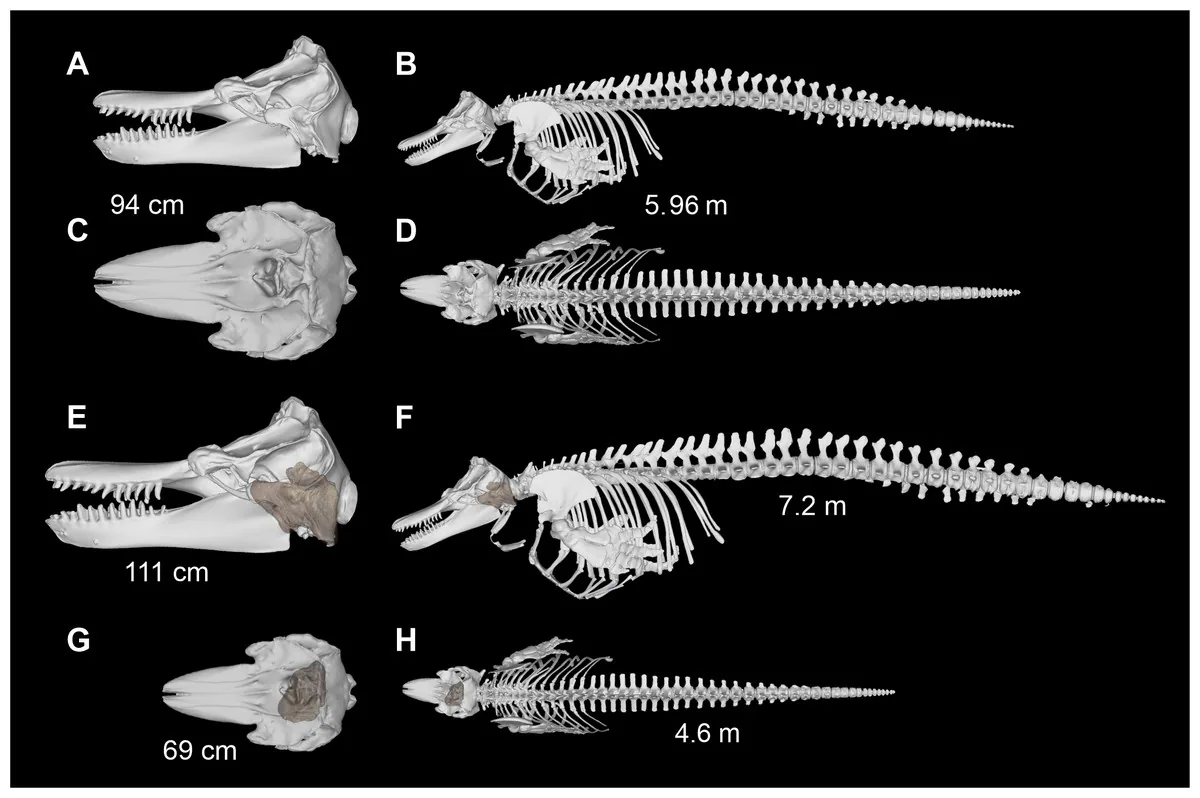
The age of the finds was determined from microscopic algae remains preserved in sediment on one of the skull fragments. They point to the Gelasian stage, the period from 2.6 to 2.1 million years ago. The killer whale found is thus the largest known member of the dolphin family from the Pleistocene.
The structure of the jaw is of particular interest to the scientists. The animal had large, deep and widely spaced tooth sockets, while its cervical vertebrae indicate an ability to move its head widely. Such features are characteristic of predators capable of seizing and tearing apart large prey. The researchers therefore classify the ancient killer whale as a macropredator, an animal specialising in hunting large prey.
It is impossible to establish from the fragments found exactly which animals it fed on. However, the authors suggest that its prey may have included large dolphins and baleen whales. The previously known fossil species Orcinus citoniensis, which lived in Italy at roughly the same time, was considerably smaller, at about 3.5 metres, and, judging by the structure of its skeleton, fed mainly on fish.
The new find shows that specialised hunting of large prey by killer whales emerged considerably earlier than had been assumed from data on the modern ecological types of these animals. At the same time, the researchers cannot yet determine whether the North Sea predator was a direct ancestor of modern killer whales or represented a separate, as yet undescribed variety of the genus Orcinus. More complete remains are needed for a definitive answer.


