

In the Rub' al Khali desert in the south of the Arabian Peninsula, archaeologists have discovered stone tools bearing residues of plant compounds that may have been used as poison during hunting. The find comes from the Uruq al-Juleiba site, which is around 125 thousand years old, and could become the oldest evidence of the use of natural poisons in hunting.
The site lay on the shore of the ancient Lake Mundafan during the last interglacial period. At that time the region's climate was considerably wetter than it is today. Instead of today's sands, there were freshwater bodies surrounded by grasslands. According to the researchers' reconstructions, the lake covered an area of about 340 sq km, with a maximum depth of 29 m.
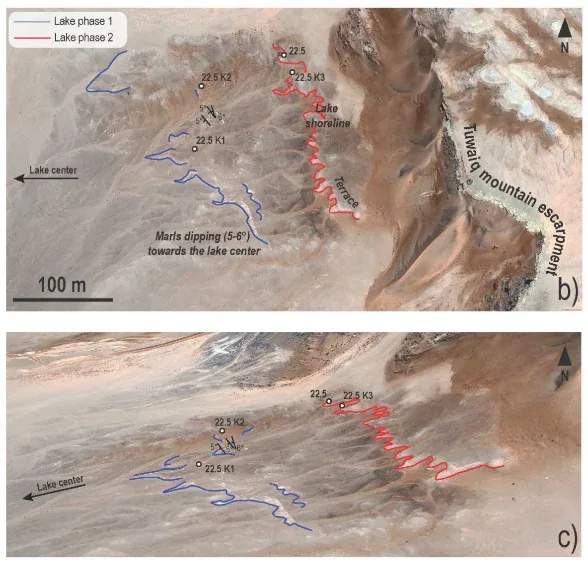
An international team of scientists led by Frans van Buchem of King Abdullah University of Science and Technology carried out an archaeological survey of the area. The researchers found more than 500 fossil remains of plants and animals, including the bones of hippopotamuses, camels, Arabian oryx, gazelles, ostriches and an extinct species of buffalo, Syncerus antiquus.
In addition, the archaeologists collected 5511 stone artefacts larger than two centimetres. Almost 98% of them were made of flint using the Levallois technique.
The age of the finds was determined using optically stimulated luminescence, as well as uranium-thorium dating and electron spin resonance. Three-dimensional reconstruction of the flakes and analysis of organic residues made it possible to study traces of the tools' use.
On the surface of 75 artefacts, the scientists found plant compounds associated with the poisonous plant Acokanthera schimperi. Some of these tools also showed damage characteristic of use in hunting.
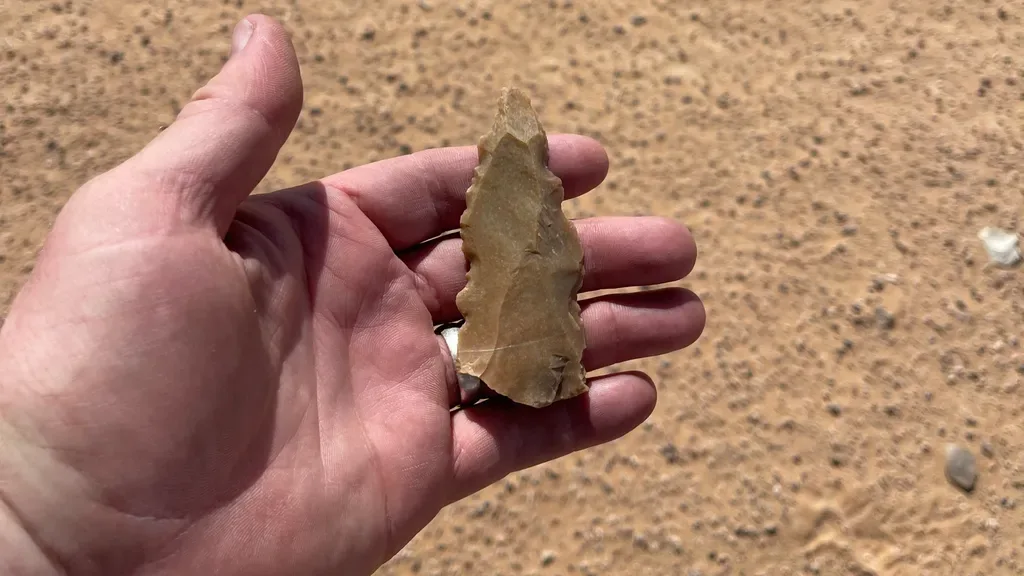
The researchers suggest that ancient hunters may have applied plant poison to their weapons, but they cannot yet establish exactly how it was obtained and used.
If the hypothesis is confirmed, the find will become the oldest known evidence of the use of plant poisons in hunting. Previously, this distinction belonged to artefacts from South Africa dating back around 60 thousand years. The new discovery would push back the history of poisoned hunting weapons by roughly 65 thousand years.
At the same time, the scientists do not claim that the tools belonged specifically to Homo sapiens. No human remains have been found at the site, and the morphology of the stone tools alone does not make it possible to determine the species of their makers.
The scientific paper has been published in the journal Science.


