

Chinese scientists have developed a hydrovoltaic generator based on lotus stems. It can produce a small amount of electricity through the natural evaporation of water.
As the South China Morning Post newspaper notes, the device can operate continuously both day and night.
The device was created by specialists at Fujian Agriculture and Forestry University. The generator is based on the vertical channels inside lotus stems, through which water and charged particles move. To improve efficiency, the researchers used the electroactive bacteria Geobacter sulfurreducens, which facilitate the transfer of ions and electrical charge.
Tests showed that the device can maintain stable electricity generation for more than 30 days. By combining several generators into a single system, the scientists were able to obtain enough energy to run small electronic devices, and an array of 256 elements demonstrated the ability to power a mobile phone.
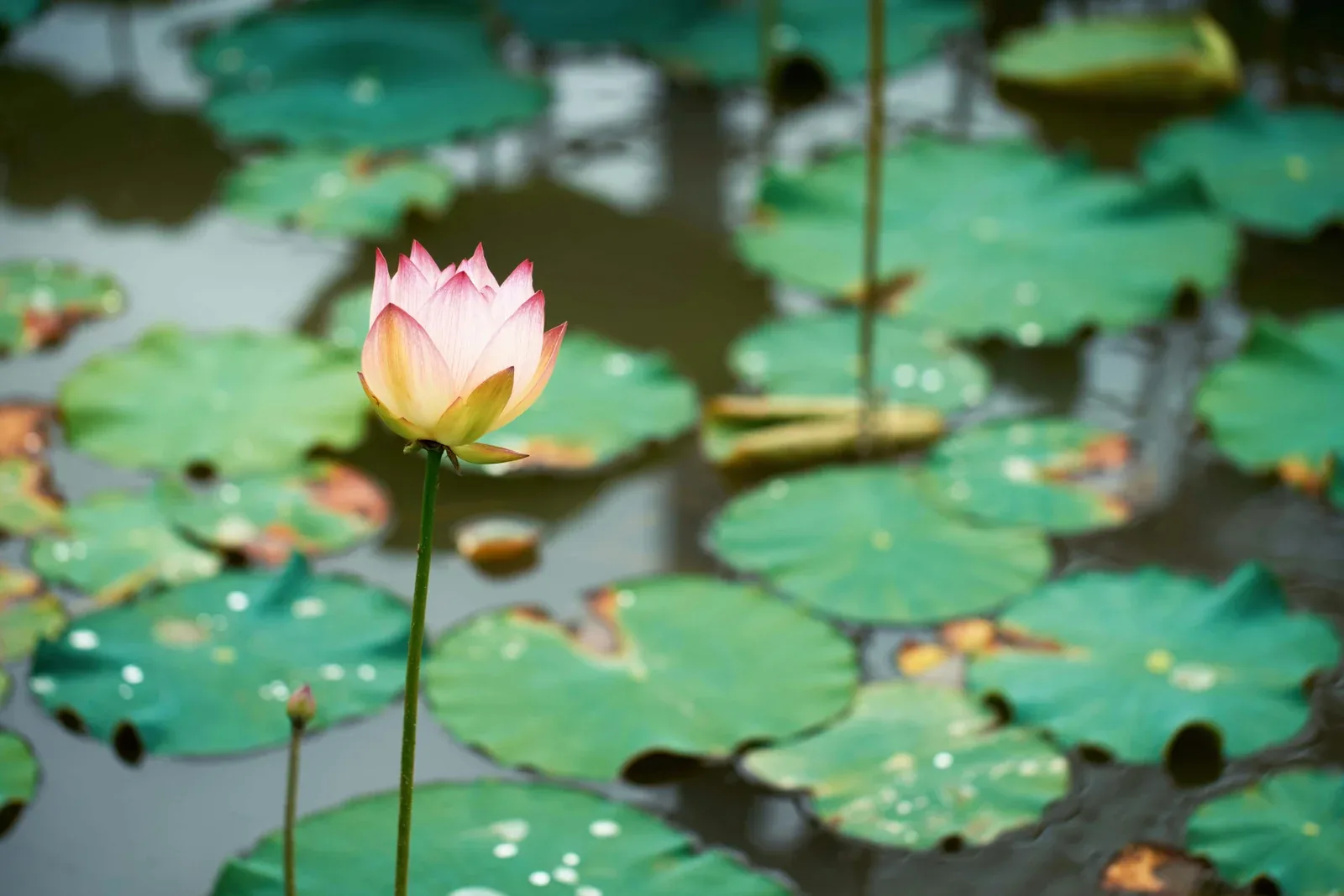
The operating principle is based on the natural evaporation of water. Water moves through the stem's microchannels, and during evaporation a charge difference arises that can be converted into electrical energy. Unlike solar panels, such a source does not depend directly on the time of day: evaporation continues at night as well.
According to one of the study's authors, Professor Hu Qichang, the technology could be used in autonomous sensors and environmental monitoring systems. This primarily concerns low-power devices located in remote areas where connecting to the power grid or replacing batteries regularly is difficult.


